
Magnetic / Spintronic Applications
Magnetic / Spintronic Applications
The use of the electronic spin in future spintronic applications requires hybrid ferromagnetic/semiconductor structures with well controlled materials properties. Besides the control of the magnetic properties there are strict requirements for the material aspects of these devices: single phase, single crystal, perfect interfaces and defect control. Spintronics therefore deals with manipulation, generation, detection of spin-polarized electrons in a wide variety of materials and devices.
Understanding the formation of complex spin textures, their high-frequency response and the transport of angular momentum are ongoing research topics with the brightest minds bringing together their expertise in studying the ordering of spins, magnetization dynamics and spin transport in magnetic materials. Key to success is the ability to fabricate insulating and electrically conducting magnetic materials as well as complex heterostructures consisting of magnetic and non-magnetic materials.

Spintronic devices
Read MoreLess
Spintronic devices (spin transport electronics) for data storage (magnetic memories) or logic gates:
read heads of magnetic hard drives based on the GMR or TMR effect
magnetoresistive random-access memory (MRAM)
spin-based transistor (Magnetic-tunnel transistor)

Spintronic systems
Read MoreLess
Spintronic systems realization in dilute magnetic semiconductors (DMS) and Heusler alloys are of particular interest in the field of quantum technology.
Solar cell and photodetector applications
Read MoreLess
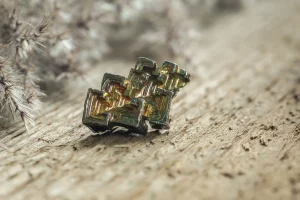
Dilute magnetic Ge:Mn nanocrystals on SiO2 thin film for metal-oxidesemiconductor (MOS) solar cell and photodetector applications
Spintronics materials and devices
Read MoreLess
Spintronics materials and devices:
from fundamentals (spin Hall effect, spin orbit torque, exchange torque, etc.) to sophisticated material science (atomically engineered materials, chiral antiferromagnetic materials, novel alloys) and cutting-edge devices (racetrack, magnetic tunnel junction, neuromorphic devices) for applications
as scaling-down of CMOS-based devices gets slower, radical solutions are necessary in order to fulfill the demands for processing the rapidly growing amount of data. Spintronics is one of the most promising candidates since spintronic devices can offer faster, reliable, high density, and energetically efficient solutions for next-generation computation technologies
Related products




References / Publications
- Fabrication of α-FeSi2 nanowhiskers and nanoblades via electron beam
physical vapor deposition - Spintronics using C60 Fullerenes: Interfaces and Devices
- Bi-Directional Growth of Thin Films: Unlocking Anisotropic Ferromagnetism and Superconductivity
- Electronic and Optical Properties of a Semiconducting Spinel (Fe2CrO4)
Some images used on this website are sourced from Freepik, FreeImages, Pikwizard, and Unsplash+. We thank the creators and platforms for providing these resources.
